
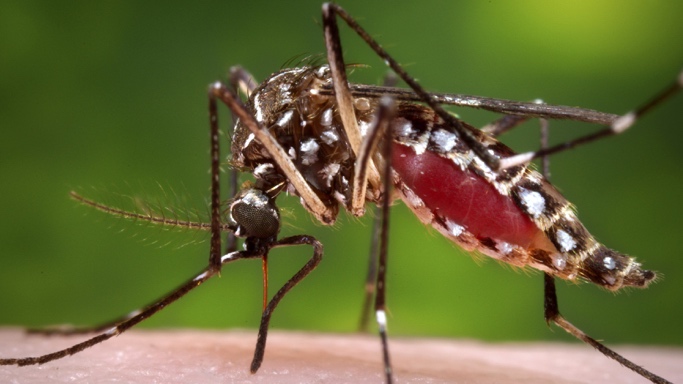
Dengue fever is a mosquito-borne virus, common throughout the tropical parts of the world. It is so prevalent that in many countries it is regarded as innocuously as a heavy cold or flu. This is not always the case, however. Bangladesh is suffering a very severe outbreak at present. Over 120,000 people have needed to be hospitalised and over 400 patients have died. With so many severely affected, the local healthcare facilities are near breaking point. Affecting not only their ability to treat those with dengue fever but also patients admitted with other conditions.
Given the severity of epidemic in Bangladesh, it’s important to understand why dengue is producing these unusually devastating symptoms. Is it simply that dengue itself has got more virulent? Not quite. But there is a scientific explanation. It concerns which strains of the virus a patient is infected with.
The dengue virus exists in 4 strains. 4 versions of the virus that are similar but not exactly the same.
When a patient is infected with a strain of dengue, flu-like symptoms occur. If they have been infected with the same strain before, their immune system is usually able to recognise it, launching countermeasures to fight it. Antibodies and Immune cells are unleashed. Importantly, specific antibodies are produced which bind with the virus, dragging it into the patients’ cells where it is killed. In this way, a patient’s immune response reduces the effects of the viral infection. Reducing symptoms and shortening the course of the illness. It’s why most people in the tropics and sub-tropics regard dengue as just another troublesome cold.
However, the situation can become much more serious when a second strain of dengue subsequently infects a patient. The immune response to the first strain can actually make the subsequent infection worse. Much worse. And this is what is happening in Bangladesh.
Over the last few years in Bangladesh there has been a switch of the dominant dengue subtype from the 3rd subtype (DENV3) to the 2nd subtype (DENV2).
Specific antibodies produced when a person has been first infected with DENV3, latch onto the new DENV2 virus - but they are not specific enough to kill it. Unfortunately, what the antibodies can still do is to drag the DENV2 into the patient’s own cells where instead of the virus being killed, it becomes concentrated. This actually helps the virus to replicate, making it even more effective at producing serious symptoms.
This process is called antibody-dependant enhancement. A side-effect of a poorly specific immune response.
The situation in Bangladesh is further compounded by a concurrent measles epidemic. Several hundred people, mostly children, are being diagnosed each day. There have been nearly 200,000 cases since March, with more than 1000 cases proving fatal. An emergency measles vaccination programme is currently underway. For the dengue outbreak, efforts at controlling the mosquito population are particularly important. Despite these measures, further increases in cases are expected over the next few months.
Dengue Fever in Brief
Dengue is a common mosquito-borne illness of the tropics and sub-tropics affecting 50-100 Million individuals world-wide every year. Whereas the vast majority of patients make a full recovery, 5% have a severe form of the disease which, because it is so common, produces 500,000 cases yearly resulting in up to 20,000 fatalities.
After having been bitten by an infected mosquito, a flu-like illness is experienced which can feature fever, headache, nausea and vomiting as well as muscle and joint pain. In a few percent of cases, severe dengue occurs in which multi-organ failure and uncontrolled bleeding can result. It is for this reason that patients with a diagnosis of dengue are sometimes admitted for observation in hospital even though most make a swift recovery.
Mosquito bite prevention is the most important strategy for personal protection against this illness and includes using A/C if available, sleeping under nets, the use of insect repellents containing DEET and wearing appropriate clothes.